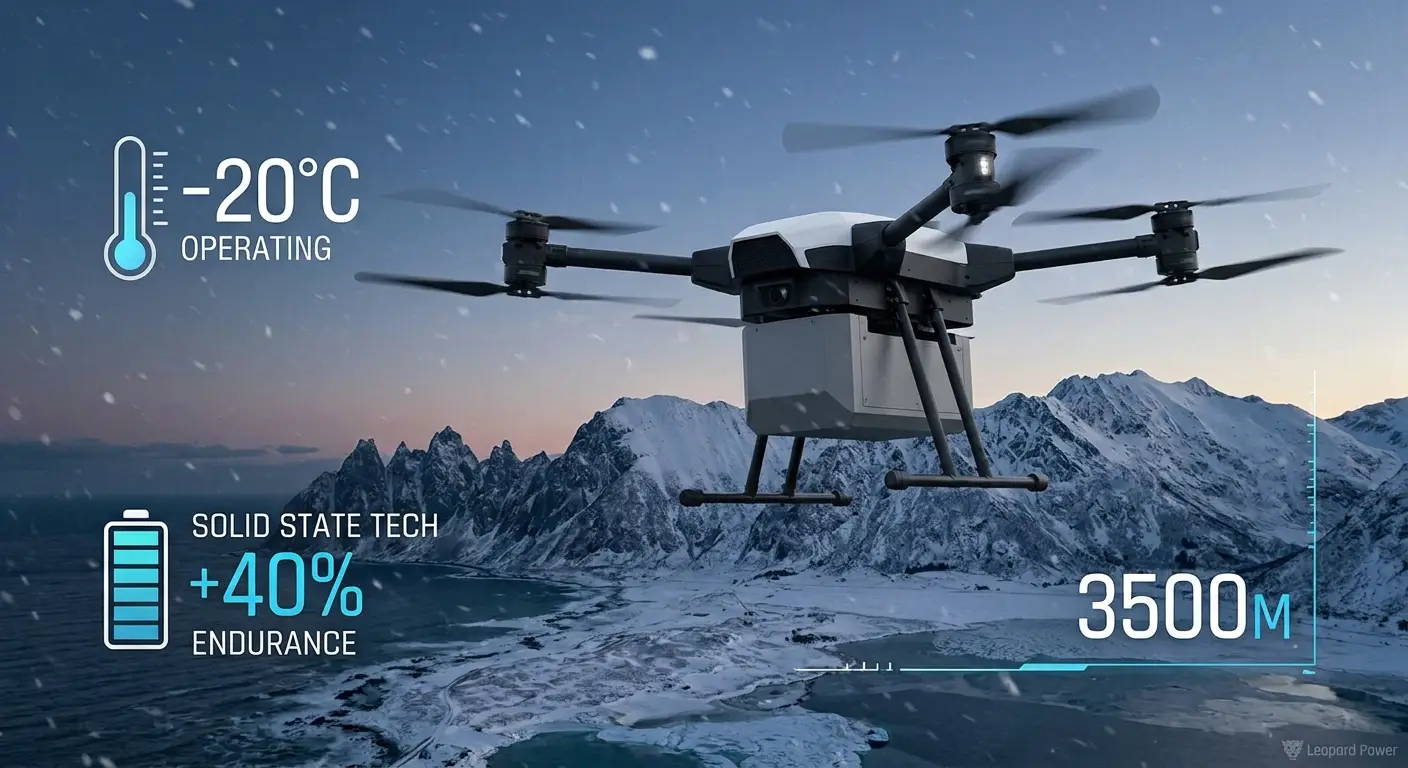
How to Choose the Right Drone Battery: Capacity, Discharge Rate, and Energy Density
As drones become increasingly important in agricultural operations, infrastructure inspection, aerial surveying, and other professional applications, choosing the right battery is an essential part of UAV system design.
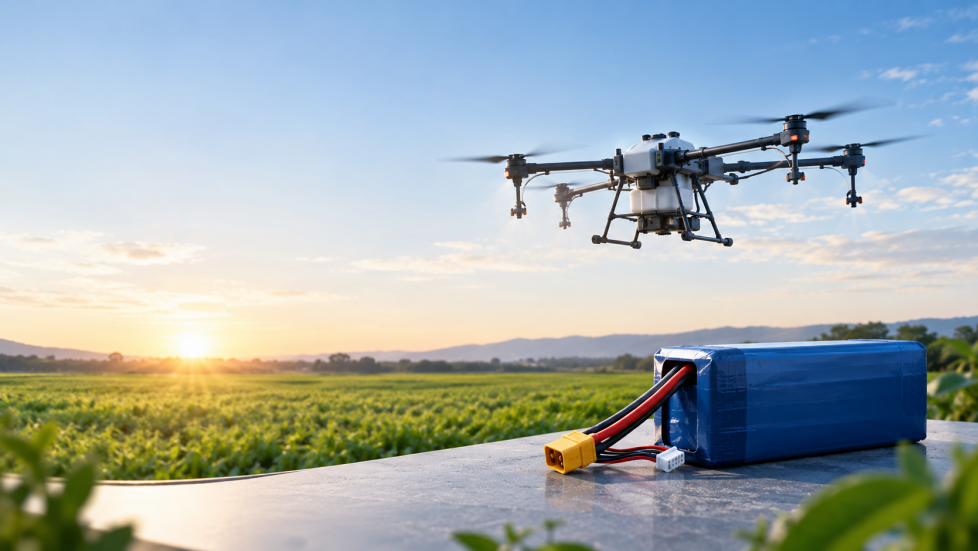
A battery affects more than flight time. Its weight, discharge capability, voltage, and physical dimensions all influence how well it fits a particular drone platform. Understanding these factors can help drone manufacturers and system integrators identify a battery solution suited to their application.
1. Battery Capacity: Balancing Energy and Weight
Battery capacity is commonly measured in milliamp-hours (mAh) or amp-hours (Ah). It indicates the amount of electrical charge a battery can store.
A higher-capacity battery can generally store more charge when compared under similar conditions. However, increasing capacity may also increase battery weight and dimensions, which can affect payload capacity and overall flight performance.
Instead of selecting a battery based on capacity alone, consider the drone’s expected flight duration, payload, propulsion system, and available installation space. The goal is to achieve an appropriate balance between stored energy and total aircraft weight.
2. Discharge Rate: Meeting Power Requirements
The discharge rate, expressed as a C-rate, describes the current delivered relative to the battery’s rated capacity.
For example, a 20Ah battery at a theoretical 5C discharge rate corresponds to a current of 100A:
20Ah × 5C = 100A
This calculation illustrates the relationship between capacity, discharge rate, and current. It does not, by itself, confirm that a particular battery can safely sustain 100A. Actual continuous and peak discharge capabilities depend on the battery design, thermal conditions, and verified specifications.
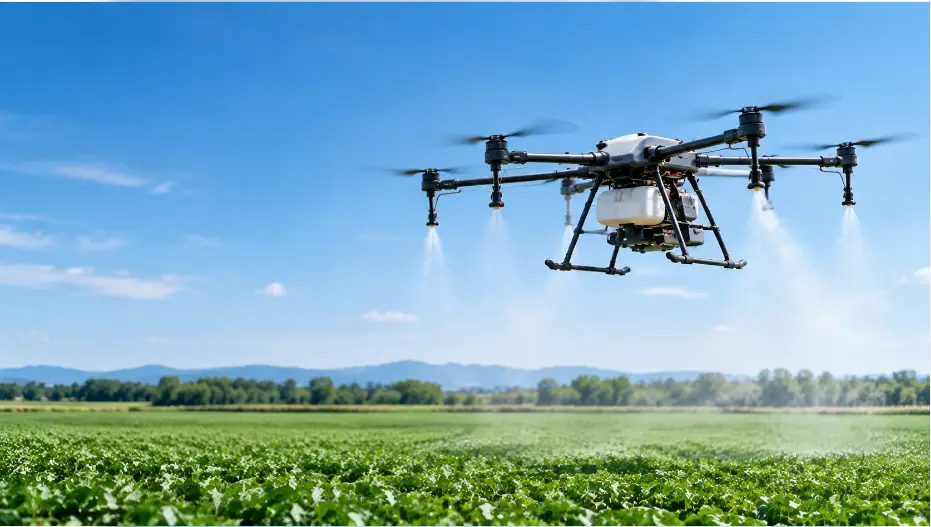
Applications such as agricultural spraying, cargo transport, and other high-power UAV operations may require substantial current during takeoff, climbing, acceleration, or payload operation. Battery selection should therefore account for the drone’s actual current demand and operating profile.
3. Energy Density: Considering Energy per Unit of Weight
Energy density is commonly expressed in watt-hours per kilogram (Wh/kg) and describes how much energy a battery stores relative to its weight.
For weight-sensitive UAV applications, higher energy density may help designers balance energy capacity and aircraft weight. This can be particularly relevant to surveying, inspection, and other missions where payload allowance and endurance are important considerations.
When comparing battery specifications, it is important to distinguish between cell-level and complete battery-pack energy density. A finished battery pack also includes components such as wiring, connectors, interconnections, and structural materials. As a result, cell-level energy density should not be treated as the energy density of the complete pack.
4. Key Factors Beyond Capacity and Energy Density
A suitable drone battery must meet the electrical, mechanical, and operating requirements of the aircraft. Consider the following factors during selection:
– Voltage compatibility: Ensure the battery configuration is appropriate for the drone’s electrical system and power electronics.
– Operating temperature: Temperature can affect available capacity, internal resistance, and power delivery.
– Dimensions and weight: Check the available battery compartment, mounting arrangement, and aircraft payload limits.
– Connectors and wiring: Confirm compatibility with the power system and the required current.
– Charging requirements: Follow the battery manufacturer’s specified charging voltage, current, and procedure.
– Performance validation: Evaluate battery behavior under representative loads and operating conditions, particularly when voltage stability under high load is important.
Considering these factors together provides a more complete basis for selecting a battery than comparing a single specification.
5. Battery Solutions for Different UAV Applications
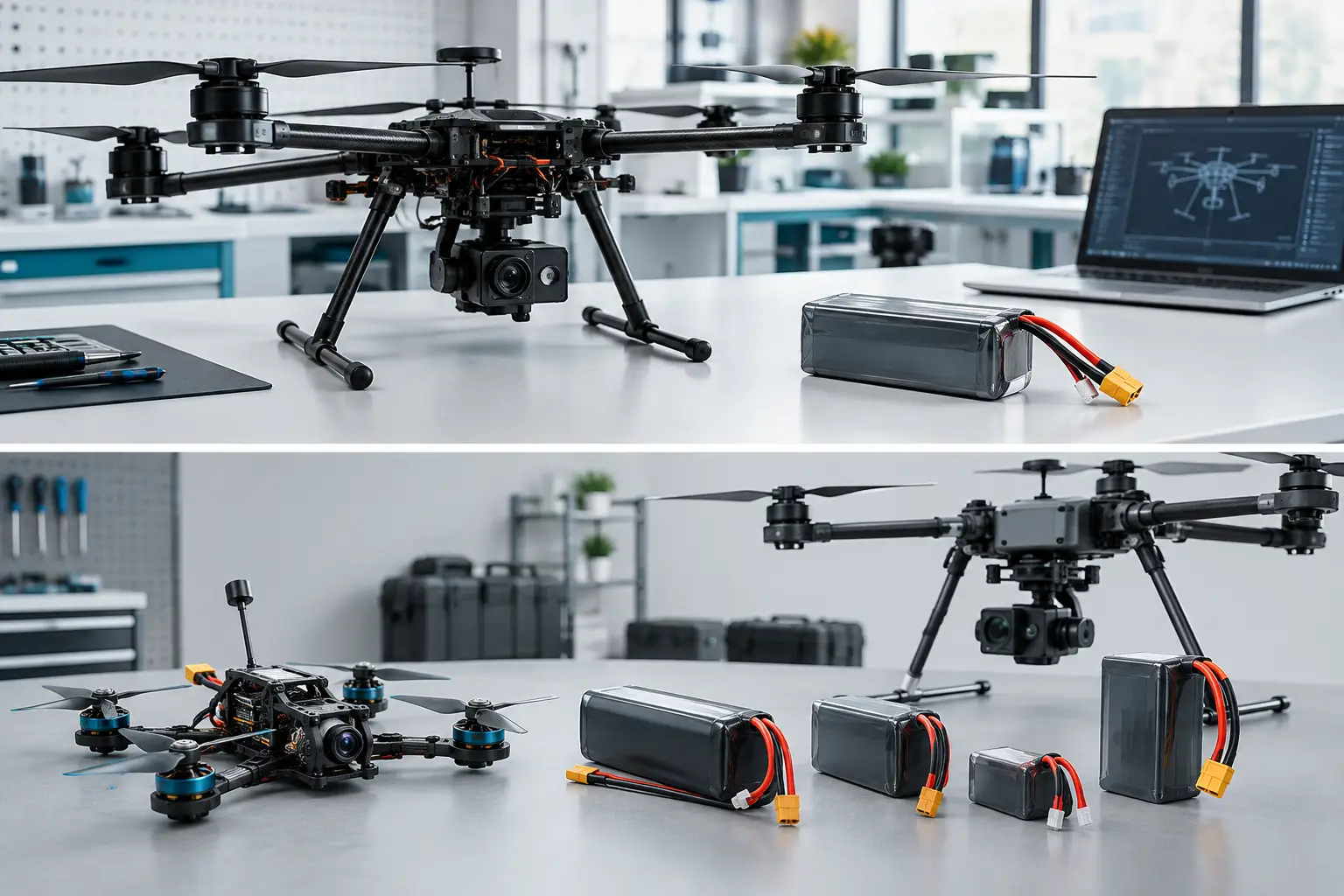
Different drone platforms have different power requirements. FPV drones may prioritize high power output and responsive performance, while agricultural UAVs may require a balance of discharge capability, capacity, and payload. Surveying and inspection platforms may place greater emphasis on endurance and weight.
Leopard Power manufactures lithium polymer (LiPo) batteries for UAV and other applications. For drone manufacturers and system integrators, battery selection can be evaluated against application requirements such as voltage, capacity, discharge rate, dimensions, weight, and connector configuration.
Defining these requirements early in the design process helps establish a clearer basis for evaluating suitable battery configurations.
Conclusion
Choosing the right drone battery involves balancing capacity, discharge capability, energy density, compatibility, and operating conditions. No single specification determines overall performance; the appropriate solution depends on the drone platform and its intended mission.
By evaluating the complete power requirements and validating battery performance under relevant operating conditions, drone manufacturers can make more informed decisions when selecting a UAV battery.
Looking for a LiPo battery solution for your UAV application? Contact Leopard Power to discuss your project’s voltage, capacity, discharge, and dimensional requirements.